What makes koa wood so special?

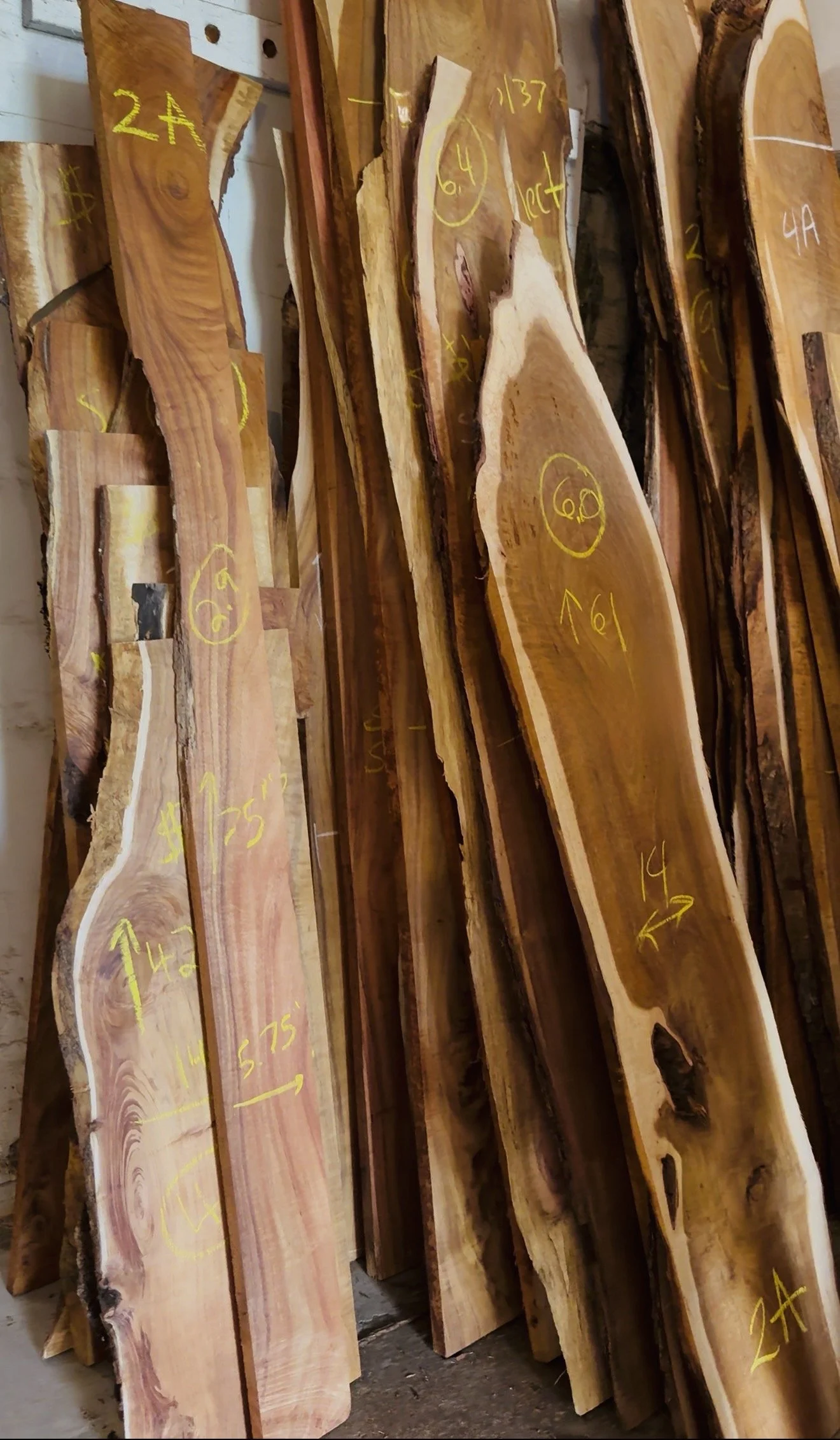
Hawaiian koa is one of the most culturally significant and visually striking woods in the world. Endemic to the Hawaiian Islands, koa has been used for centuries by Native Hawaiians to build canoes, tools, weapons and objects of great spiritual and practical importance. The word koa itself means “warrior” or “brave,” reflecting both the strength of the wood and the respect it has long commanded.
Beyond its cultural importance, koa is highly valued as a carving material because of its unique balance of strength, stability and beauty. It is dense and durable, yet workable by hand, allowing for crisp detail and smooth flowing forms. Its natural color ranges from golden honey tones to deep reddish browns, often shifting dramatically within a single piece. No two boards are ever alike.
Koa is also rare. Large koa trees grow slowly and only in specific elevations and climates. Today, koa harvesting is tightly regulated, and high-quality carving wood is increasingly difficult to source. Responsible use of koa is essential to ensuring this resource remains available for future generations. We choose to work only with sustainably and responsibly sourced koa, honoring both the land it comes from and the cultural legacy it carries.
What is Curly Koa?
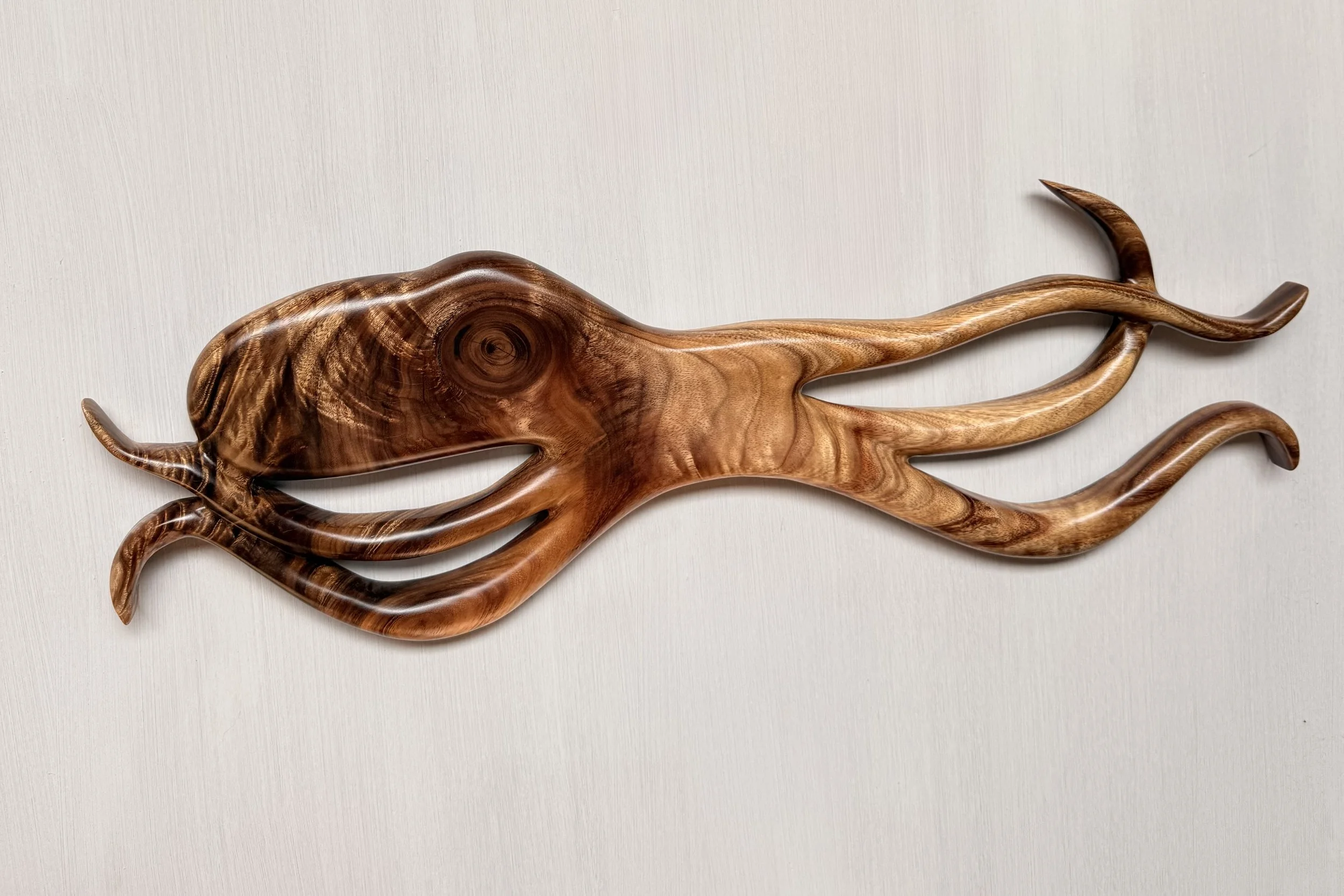
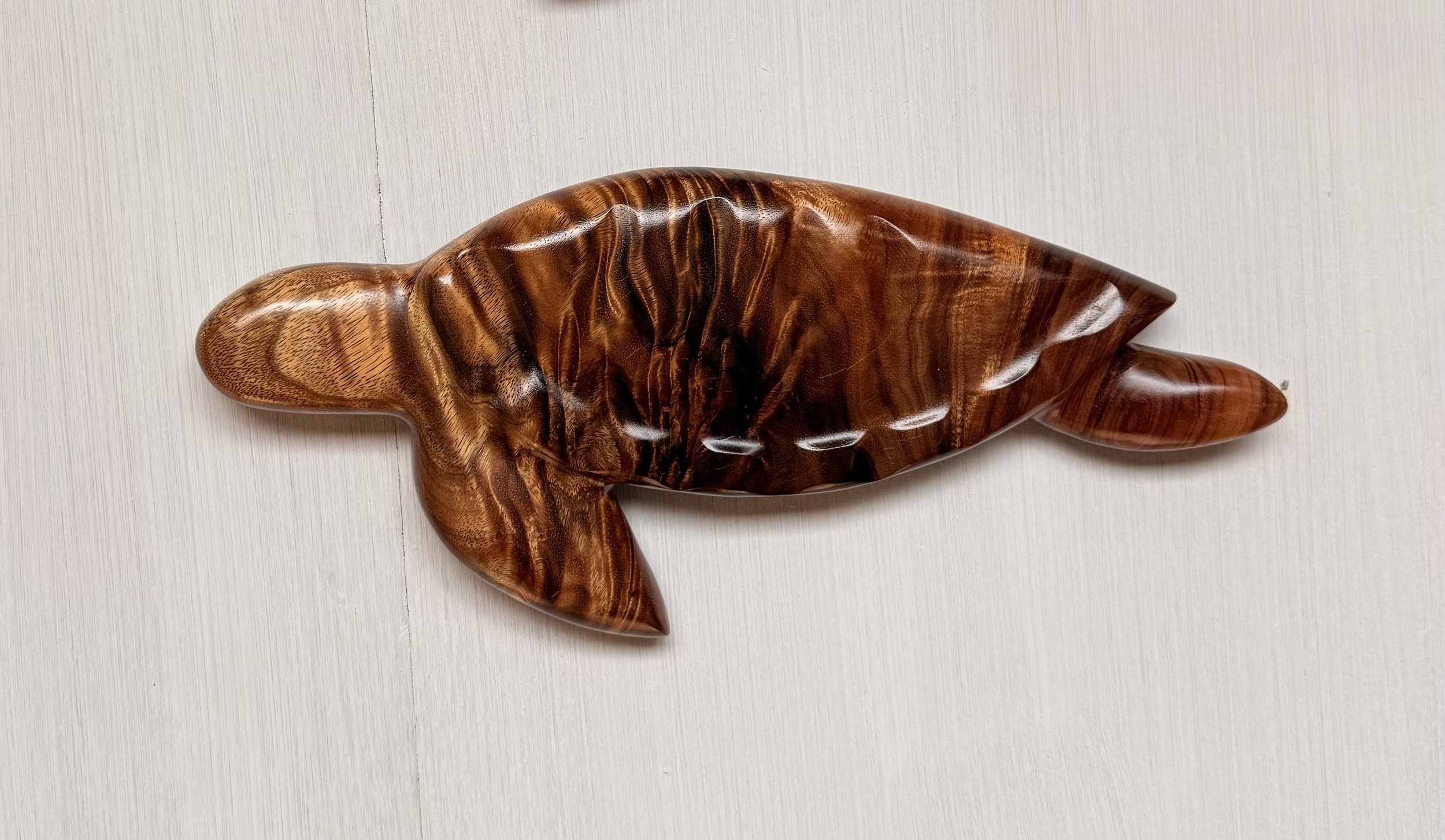
Curly koa is a rare and highly sought-after form of koa wood, prized for its dramatic, shimmering figure. The “curl” refers to a rippling pattern in the wood grain that reflects light, creating a three-dimensional, almost moving appearance. This effect is entirely natural and occurs when the wood fibers grow in a slightly irregular, wavelike pattern.
The curl is believed to develop due to a combination of genetics, environmental stress and growth conditions. Not all koa trees produce curl, and even within a single tree, curly grain may appear only in certain sections. Because of this unpredictability, curly koa is far less common than straight-grained koa.
Curly koa is more expensive not only because it is rare, but also because much of it cannot be used structurally and must be carefully selected and oriented for carving. When used thoughtfully, it elevates a piece with depth, movement and exceptional visual character - qualities that collectors and craftsmen alike deeply value.
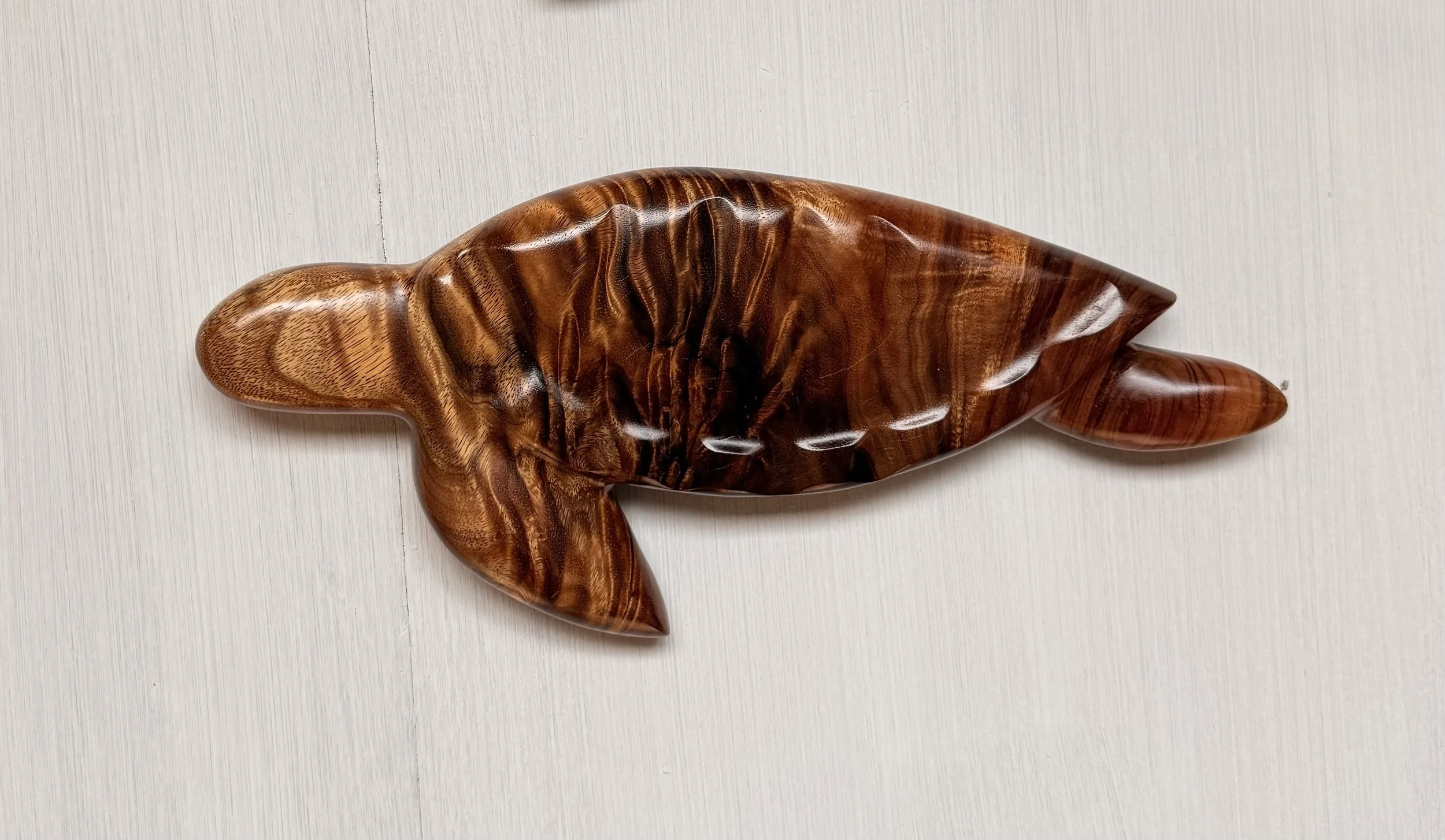
Straight vs Curly Koa
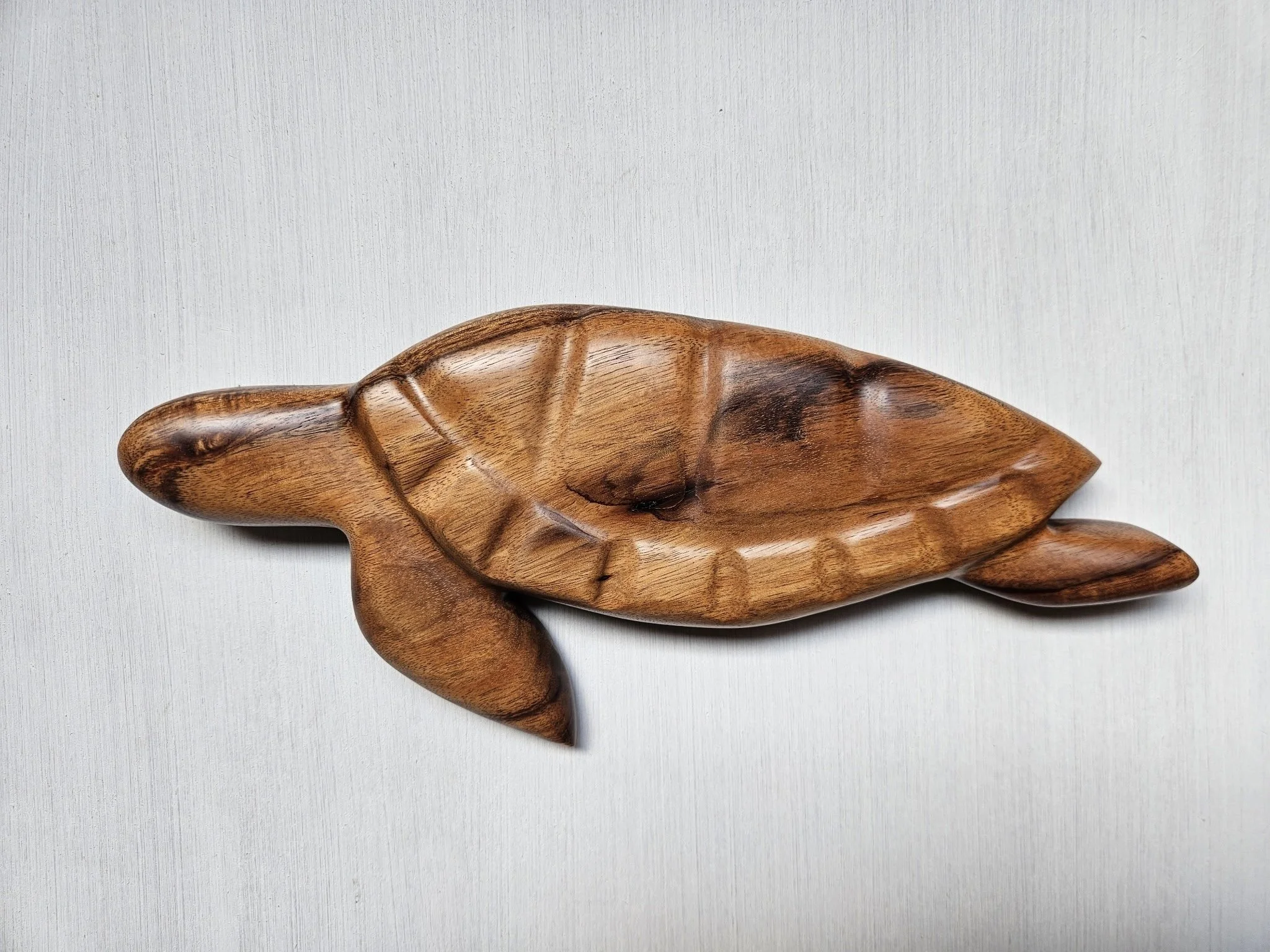
While the same gorgeous honu design was used, here is a demonstration of the difference between straight grain koa (the first one) and curly koa (the second)
Both are made from koa, but you’ll notice the almost marble-like grain pattern of the second turtle. That is the curl! This grain also looks nearly iridescent in the light.